

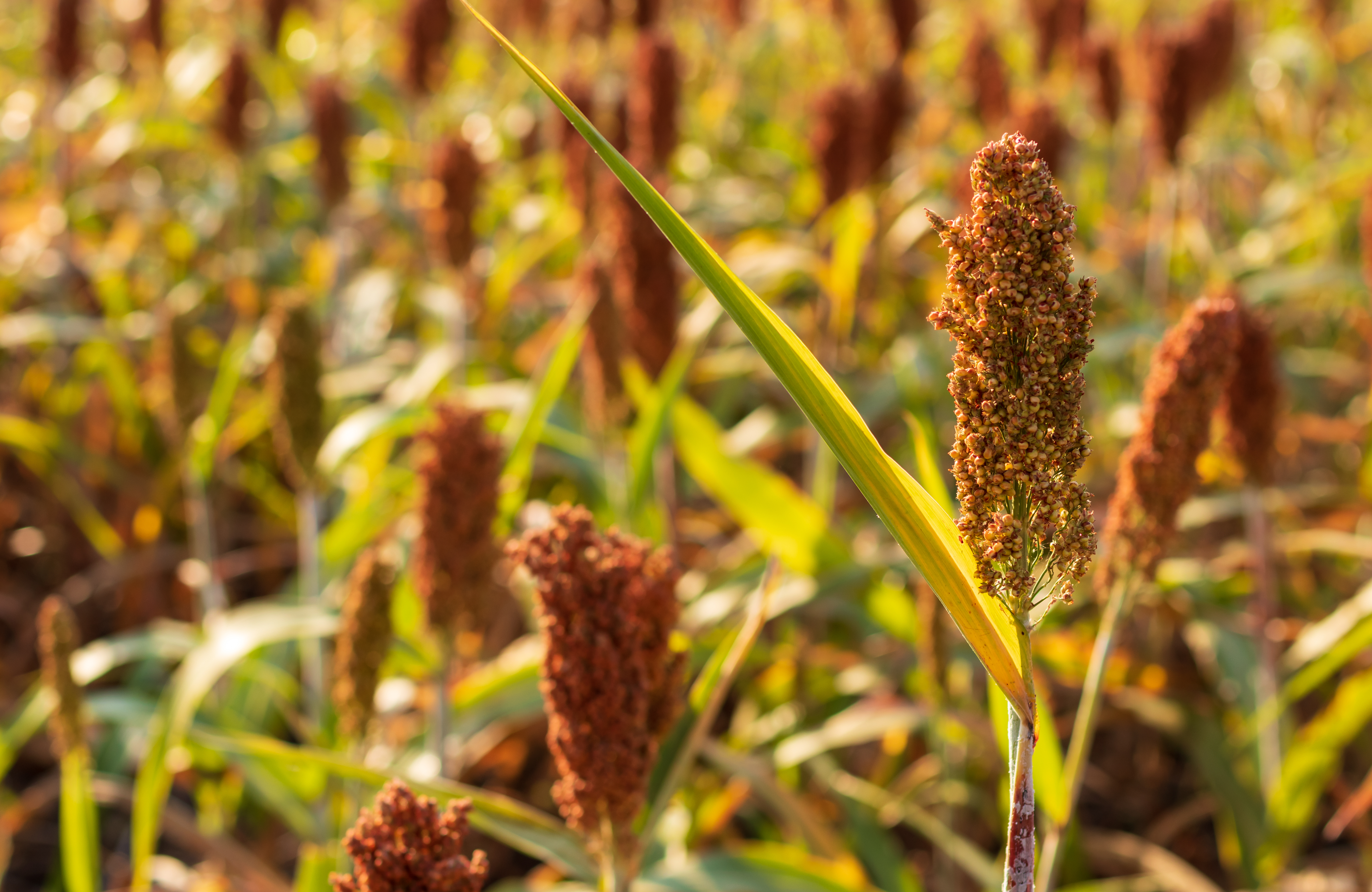
Sorghum: The ancient grain behind Baijiu

It grows under scorching suns, resists drought, and has nourished entire civilizations for millennia. And yet, in Europe, sorghum remains largely unknown to the general public. It is, however, the fifth most cultivated cereal in the world, behind corn, rice, wheat, and barley, and above all, the key ingredient without which Baijiu would not be what it is.
A 10,000-year-old cereal
Sorghum is one of the oldest cereals known to humanity. Traces of it have been found 9,000 to 10,000 years ago in Sudan, Ethiopia, and Egypt. From Africa, it traveled to Asia and the Middle East, then to the Americas, adapting to each terroir with remarkable ease. Today, it is cultivated in Africa, India, the United States, Mexico, and France, mainly in the Occitanie region. This trajectory testifies to a cereal that is both robust and versatile, capable of thriving where others give up.
The cereal that's not afraid of the heat
What distinguishes sorghum from most other cereals is its ability to thrive in difficult climatic conditions. It resists drought and adapts to low rainfall areas, consuming about 30% less water than corn, while ensuring a good yield. Its photosynthesis is very fast, it matures in only 120 days, and three annual harvests are possible in the most favorable areas. For all these reasons, many experts now consider it the cereal of the future, particularly well adapted to the challenges of climate change.
A remarkable nutritional profile
Beyond its agricultural qualities, sorghum is a cereal with serious nutritional assets. It is a source of plant proteins and carbohydrates provided by starch, with the particularity of providing 8 essential amino acids. Rich in fiber and naturally gluten-free, it is suitable for people who are intolerant or sensitive to this protein. It also contains phenolic compounds, powerful natural antioxidants, as well as iron and various essential minerals.
Sorghum and Baijiu: a millennial love story
If sorghum is the queen cereal of Baijiu, it's no coincidence. Sorghum gives Baijiu a unique power and earthy aromas that other cereals like rice, which are sweeter and lighter, cannot reproduce. Its richness in starch makes it particularly favorable for fermentation, while its tannins and phenolic compounds directly contribute to the aromatic complexity of the final spirit. It is this unique interaction between the cereal, the natural ferment called Qū, and the environment of each distillery that gives Baijiu its singular character, so difficult to imitate.
The process begins with steaming the sorghum, which is first ground then moistened. Once cooled, it is mixed with water and Qū to form a grain mash that will be placed in sealed fermentation pits. Depending on the desired Baijiu style, this fermentation can last several months before distillation concentrates and reveals all the developed aromas.
A cereal returning to our fields
In France, sorghum is cultivated on nearly 100,000 hectares, and in regions regularly affected by drought, farmers are increasingly turning to it, especially in the Southwest where it is beginning to supplant corn. This dynamic is excellent news for producers who, like the great Asian distillers before them, have understood the full potential of this exceptional cereal. Because if sorghum has been the backbone of Baijiu for millennia in China, there is nothing to prevent other terroirs and other expertise from revealing in turn what it has to offer.
